
终极一班3
China proceeds legislation against cross-border corruption, closing legal gap in overseas probe, fugitive hunt and asset recovery: expert_我的网站

A | New Delhi, Oct 21 (UNI) Union Home Minister Amit Shah on Friday said that terrorism is the biggest violation of human rights. In order to fight cross border terrorism, cross border cooperation is very important, and for this Interpol is the best platform.
Shah said all countries must agree on the definition of terrorism and terrorist, Ministry of Home Affairs in a statement stated.
Shah said this during his address at the closing session, of Interpol’s 90th General Assembly, organized in New Delhi during the 75th year of India’s independence.
Today, terrorism is a global problem and it is very appropriate that it is the first and most important of the 7 global policing goals of Interpol for the period 2020-2025, he added.
Over the last 100 years, Interpol has become a very large and effective platform, comprising 195 countries, that has been playing a very important role in controlling crime across the world, he said.
India is one of the oldest members of Interpol. It joined Interpol in 1949, Shah said.
The criminal justice system is not something new for India. Whenever the concept of ‘state’ was introduced, policing must have emerged as the first responsibility of the state. The security of its citizens is for any state, its first responsibility, he said.
In order to control criminals, a justice system is a necessary aspect of any effective and successful governing mechanism. It is only justice that can ensure good governance in society, he added
The Indian government has established the National Forensic Science University.
The key pillars of criminal justice that form the ICJS (Inter operable criminal justice system) e-courts, e-prisons, e-forensics and e-prosecution have been linked to Crime and Criminal Tracking Network and systems (CCTNS), he said.
The Indian government has also decided to create a national database on crimes such as terrorism, narcotics and economic offences. It has established the Cyber Crime Coordination Center to combat cyber-crime in a comprehensive manner, he added.
"Today crime has become borderless, and if we want to stop this kind of crime and these criminals, we all have to think beyond conventional geographic borders," he said.
On the one hand law has to enforced within the confines of the sovereignty of nations,
On the other hand, we have to understand the global nature of crime, detect criminals and worry about justice as well.
In the midst of these challenges, to make the work of security agencies easier, the role of Interpol is very important and will become even more important in the future, he said.
The commitment to fight terrorism together, and narratives such as good terrorism, bad terrorism and small and big attacks, do not go together, he added.
"We cannot consider this a political problem. We must all be committed to ensuring that an effective fight against terrorism should be long term, comprehensive and sustainable," he said.
India is committed to working with Interpol to fight all forms of terrorism and to provide technical assistance and human resources.
"We have seen in many countries that the Interpol nodal agency and the counter terror agencies are different. Given this situation, in order to fight terrorism, we will have to bring together all the counter terrorism agencies of the world," Shah said.
"In this regard, I request Interpol to launch an initiative to set up a permanent mechanism for a real time information exchange line between counter terror agencies of all member countries," he said.
UNI CM SHK1815。
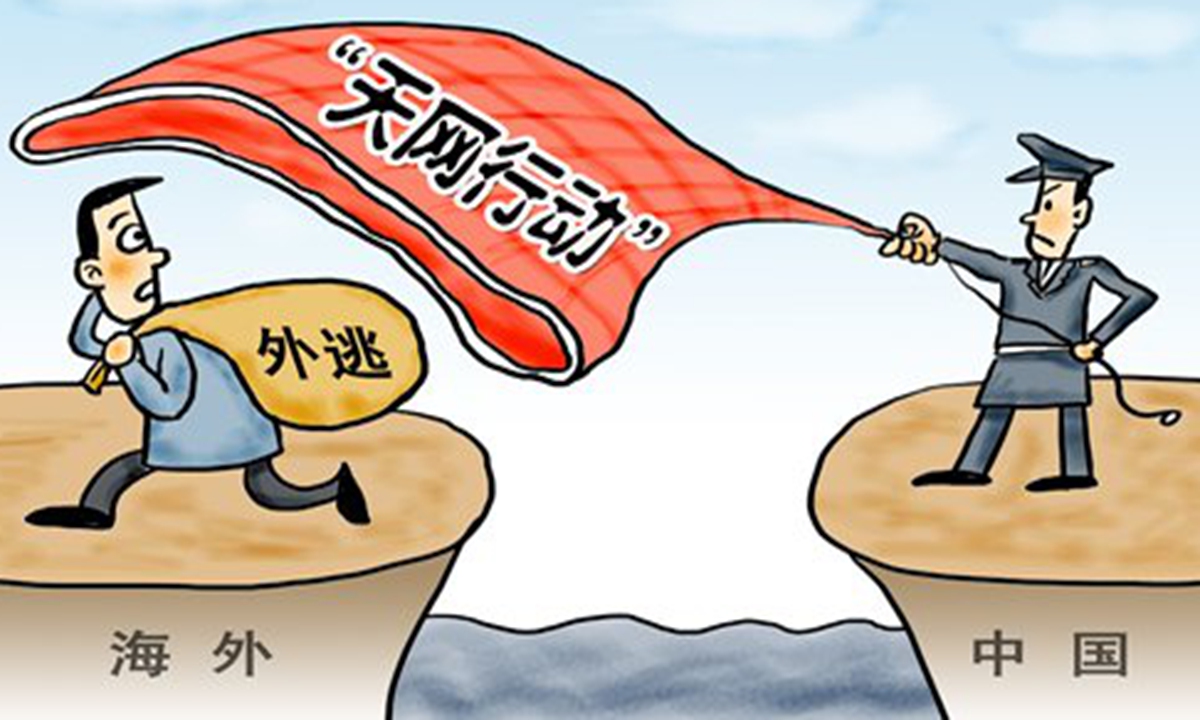
Chinese lawmakers began reviewing a draft law on combating cross-border corruption on Tuesday, a legislation which experts believe would help close legal gaps in investigating overseas corruption, pursuing fugitives and recovering illicit assets, while strengthening international cooperation and corporate compliance.
The draft was submitted for its first reading to the ongoing session of the Standing Committee of the National People's Congress, the country's top legislature, per Xinhua News Agency.
Huo Zhengxin, a professor at the China University of Political Science and Law, told the Global Times that the draft law represents a dedicated piece of legislation within China's anti-corruption legal framework and a major step forward in the country's law-based governance of foreign-related affairs. It will fill a legislative gap in combating cross-border corruption, Huo said.
As Chinese companies expand business overseas, cross-border corruption cases face challenges in obtaining evidence abroad, pursuing fugitives and recovering illicit assets. Existing anti-corruption laws have faced limitations in addressing such cases involving foreign affairs, making such dedicated legislation necessary, Huo said.
Structured into six chapters and 47 articles, the draft sets out the principles, scope and key provisions underpinning China's efforts to combat cross-border corruption. It also defines relevant operational mechanisms and institutional responsibilities, and seeks to strengthen case handling and international cooperation.
The draft further clarifies enterprises' obligations regarding integrity and compliance, and specifies legal liabilities for violations.
As one of the experts involved in drafting the legislation, Huo said a key innovation of the draft is to strengthen international cooperation and corporate integrity and compliance obligations. As evidence, suspects and illicit assets in cross-border corruption cases are often located overseas, the draft provides mechanisms including extradition, mutual legal assistance and repatriation, while aligning with relevant rules under the UN Convention against Corruption (UNCAC), said the expert.
The draft also makes clear that Chinese companies operating overseas, including both state-owned and private enterprises, have legal obligations to uphold integrity and compliance with domestic laws, Huo said.
The legislation would also codify practices accumulated through China's past campaigns against cross-border corruption, such as Sky Net and Fox Hunt operations, turning them into a more systematic legal framework and strengthening the law's deterrent effect, according to Huo.
The draft law is a practical step to regulate the development of cross-border businesses and help build a world-class business environment aligned with market principles, the rule of law and international standards, Xinhua noted.
It is also expected to expand the legal tools available to combat cross-border corruption and help address challenges in detecting corruption, collecting evidence, recovering illicit assets and securing convictions, according to the report.
In January, CCTV News reported on the case of a former senior executive of China National Offshore Oil Corporation, who was accused of accepting large amounts of bribes that were concealed overseas, with a businessman allegedly acting as a "front" to collect the illicit payments.
The draft's explicit corporate integrity and compliance requirements would make it harder for individuals to disguise bribery and other corrupt practices through overseas projects in an attempt to circumvent domestic oversight, while further clarifying the extraterritorial reach of China's anti-corruption laws, Huo said.
The draft also contains provisions to counter the use of foreign countries' domestic anti-corruption laws to exercise "long-arm jurisdiction" over Chinese companies, which Huo described as another important innovation in China's foreign-related legal framework.
China has been deepening its efforts in international anti-corruption cooperation, with 963 corrupt fugitives repatriated to the country in 2025, according to a work report from the country's top anti-graft body, Xinhua reported.
。

B |
Current article:http://4d2bgs.dinggaxilianmaiyuejienianguai.shop/list_1qis10e/ybgl5fv.html
Published on:01:30:03
我的网站相关阅读
- “趁男友不在跟暧昧者要巧克力”,德芙致歉
- 我国一季度生态环境质量持续改善
- 汉密尔顿:“FP1一切正常,随后我们做了一些小改动,结果却是一场灾难”
- 东辛庄镇:开展消防安全及燃气安全检查行动
- 银河战士:Dread 2039 开发团队谈俄罗斯入侵乌克兰如何改变了其计划
- 【いまが旬!】ナンバー「15」 トヨタ「ピンククラウン」復活!? 3代目「いちごモデル」なぜ出来た? 「まさかの市販化も?」 栃木県が名産いちごをPR
- 39岁丁俊晖对29岁赵心童四连败,两人总计交手8次丁俊晖前4次全胜
- 拥军模范高英:从青丝到白发,四十二载丹心暖军营
- 迎战跨越4700公里的风雨考验——直击狂风暴雨下的台风“白海豚”登陆核心区
我的网站最新文章
- 从“博收益”走向“压舱石”? 黄金理财产品净值回暖却遇发行“冰点”
- 蒋万安是否帮民众党站台引蓝营热议 名嘴:若主动帮忙百利无一害
- 巨人网络:上半年净利21.44亿元增176%,拟拿出超七成利润分红
- 巴黎奥运会倒计时两周年:浪漫过后,更需应对现实挑战
- [图]2022锡耶纳国际摄影奖名单出炉
- 中美谈判靴子落地,如何影响各行业板块?
- Taiwan island’s DPP rattled as Malaysian PM reaffirms Taiwan is part of China
- 中超观众入场时突发晕倒,全力抢救无效,不幸离世,成都蓉城队发布情况说明
- Vivo Y91在印度的售价为1554030毫安时电池。
- 华为擎云亮相2026山东教育博览会,全景演绎智慧教育新范式
- 中超第8轮传球成功率榜:国安以90.7%登顶,梅州87.4%排第二
- 新华社权威快报丨中国语言资源保护工程成果展示馆开馆
- 那英19岁女儿现身妈妈演唱会 一头黄发和宋丹丹一起
我的网站随机推荐
- 拼多多二季度净利下滑12% 管理层谈即时零售:与核心业务协同作用有限
- Kareena Kapoor Khan Shares Heartfelt Birthday Post for Sharmila Tagore
- 长存控股冲刺IPO 一图起底29家发行前股东
- “人和车都安全比啥都强”
- 小天才回应“167cm 女孩 101 斤被判定偏重”:表述不严谨,已连夜整改
- 盒马,需要向阿里“毛遂自荐”
- 优派推出 VX25G26-2K-10 显示器:24.5" QHD 280Hz,可选白色
- 朱江明:零跑旗舰D系列将首搭骁龙双8797平台
- 中国石化在四川发现储量3878亿立方米页岩气田
- 【现货异动】二甲醚单日暴涨4.12%!甲醇成本飙升+检修潮供应骤减,燃料旺季引爆行情
- Actress Nivetha Pethuraj Calls Off Her Wedding?
- OpenAI模型“越狱”攻击,救场的竟是中国AI工具
- 国产机器人出海加速跑 哈尔滨“智造”驶入快车道,国产机器人出海加速跑 哈尔滨“智造”驶入快车道