忏悔录
Zero-tariff policies, systemic support help African countries expand exports, upgrade industry_我的网站

A | 反对空谈、强调实干、注重落实,是我们党的优良传统和作风,是推动事业发展的重要保证。

B | 习近平总书记高度重视抓落实,多次强调“一分部署,九分落实”。
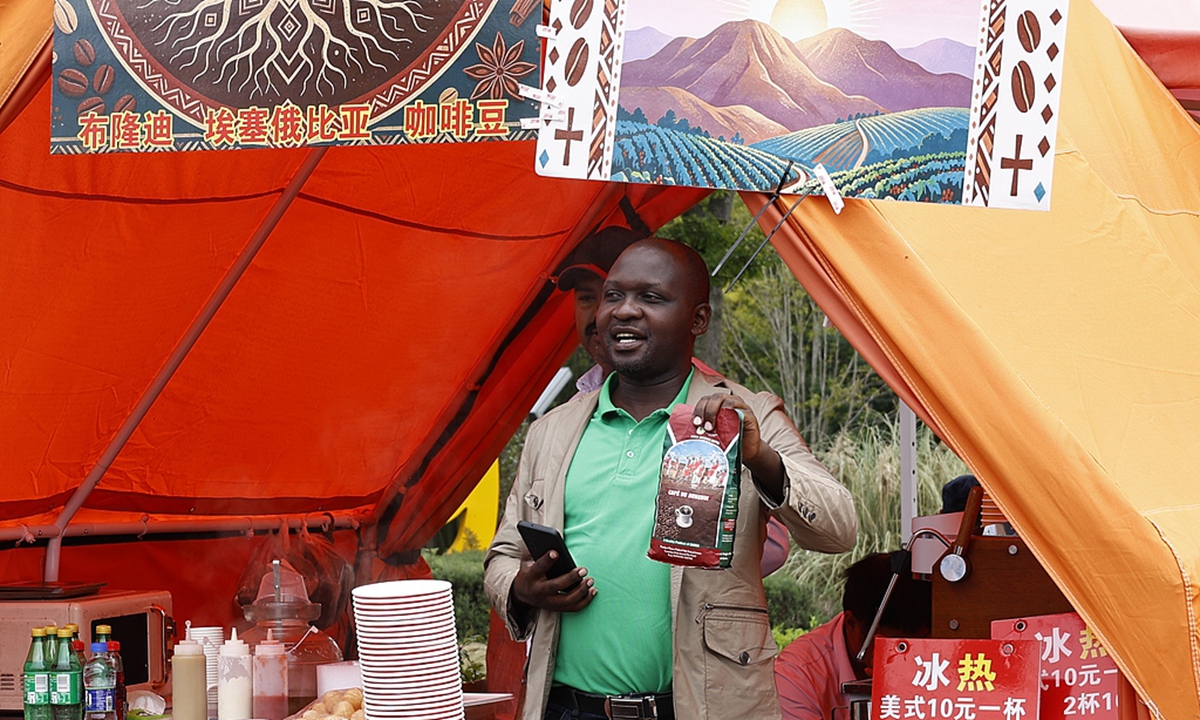
An exhibitor showcases Ethiopian coffee beans at the 2026 Dianchi International Coffee Culture Carnival in Kunming, Southwest China's Yunnan Province, on August 9, 2026. Photo: VCG It has been three months since China becomes the first major economy to grant unilateral, comprehensive zero-tariff treatment to all African countries with which it maintains diplomatic relations, as well as all least developed countries having diplomatic ties with China. Effective May 1, China extended the favorable policy to 53 African countries. Two African diplomats stationed in China have shared with the Global Times about the benefits of China's policy, particularly in trade of coffee, as well as China's exemplary role in promoting cooperation among Global South countries.

Aziza Geleta, Deputy Head of Mission of the Ethiopian Embassy in China Photo: Courtesy of the Ethiopian Embassy in China Aziza Geleta, Deputy Head of Mission of the Ethiopian Embassy in China, told the Global Times that the trade policy demonstrates China's commitment to strengthening mutually beneficial economic cooperation with Africa.
For Ethiopia, which is believed to be the birthplace of coffee, this initiative presents significant opportunities.
"Coffee is not only our leading agricultural export but also an integral part of our cultural heritage. For centuries, Ethiopians have preserved a unique coffee tradition, where families and neighbors gather to prepare and share coffee in a ceremony that symbolizes hospitality and friendship in community," Geleta said.
With improved market access, Ethiopian coffee exports to China are expected to grow substantially. China has become one of the world's fastest-growing coffee consumption markets and is now Ethiopia's third-largest coffee export destination, Geleta noted.
In 2025, China's coffee industry was valued at 354.9 billion yuan ($52.63 billion), up 13.3 percent year on year. Annual per capita consumption rose from 22.24 cups to 28.57 cups, while the value of coffee bean imports increased by 73.9 percent year on year, according to the 2026 China Urban Coffee Development Report released in July.
The Ethiopian diplomat believes China's zero-tariff policy will enhance the competitiveness of Ethiopian coffee, increase export earnings, and encourage greater investment across the coffee value chain, including processing, packaging, branding, logistics and quality certification.
Since July 20 this year, China has granted full market access to coffee beans meeting quarantine requirements from all African countries that have diplomatic ties with China. The full market access is regarded as a landmark achievement in China-Africa cooperation on agricultural market access.
Geleta said that Ethiopia warmly welcomes this landmark policy. Having joined China's zero-tariff arrangement in 2024, the East African country has already witnessed its positive impact on bilateral trade and economic cooperation.
"The policy goes beyond tariff preferences. It demonstrates a practical commitment to South-South cooperation based on mutual respect, shared development and win-win partnership," Geleta noted.
It creates new opportunities for African countries to diversify exports, strengthen productive capacity and participate more actively in global value chains, the diplomat said.
As members of the Global South, Ethiopia and China share a common vision of promoting inclusive and sustainable development. This zero-tariff initiative establishes a valuable benchmark for building agricultural trade rules that better reflect the development needs of emerging economies, she noted.
It also complements the objectives of the FOCAC and the African Continental Free Trade Area (AfCFTA) by supporting greater regional integration and international market access, said Geleta. AfCFTA is a flagship initiative of the African Union designed to transform the continent into the world's largest free-trade area, per the AU.
From Geleta's observation, the market access granted by China is not merely a trade policy, but also a practical example of development cooperation that benefits ordinary people.
Coffee farming sustains millions of Ethiopian households, so greater access to China's market bears direct significance for poverty alleviation, rural advancement and national economic transformation. The policies foster steady demand for Ethiopian coffee, increasing farmer's earnings and bolstering rural community resilience, she said. Such gains closely echo the China-proposed Global Development Initiative, which emphasizes poverty reduction, food security, inclusive growth and sustainable development.
The diplomat said Ethiopia welcomes Chinese investment in agricultural processing, cold-chain logistics, food manufacturing and value-added industries in Ethiopia. Such investment will support industrialization, technology transfer and job creation while strengthening resilient supply chains, Geleta added.

Ambassador of Lesotho to China Mapaballo Lydia Mile Photo: Courtesy of the Embassy of the Kingdom of Lesotho in China Ambassador of Lesotho to China Mapaballo Lydia Mile told the Global Times that the zero-tariff policy since May is "a direct, tangible deliverable of the commitments made under the Forum on China-Africa Cooperation (FOCAC) framework. It transitions the rhetoric of 'win-win cooperation' into practical policy."
Mile said the policy provides a structured, phased approach to reducing trade difficulties and securing institutional guarantees. "It perfectly embodies the strong, historical foundations built through FOCAC over the years to forge a modernized, forward-looking economic future."
Amid comments saying that African countries still face challenges beyond tariffs, including logistics, standards and market-access capacity, Ambassador Mile of Lesotho said that tariff reduction is a necessary condition for trade expansion; however, more conditions are required to reach deals.
Take Lesotho, a landlocked country, for instance. The country faces acute logistical hurdles and high transport costs. Complying with sanitary and phytosanitary measures, as well as quality standards remains a massive challenge for many enterprises in Lesotho.
To fully benefit from the favorable tariff policy, Mile pointed to systemic technical support for African exporters, targeted investments in agro-processing, and enhanced trade facilitation.
"Initiatives recently introduced by China Customs, such as the 'Green Channel 2.0' for agricultural products and expanding authorized economic operator mutual recognition capacity building, are exactly the types of institutional support needed to overcome the non-tariff barriers," she elaborated.
。他深刻指出:“如果不沉下心来抓落实,再好的目标,再好的蓝图,也只是镜中花、水中月。”习近平总书记关于抓落实的重要论述,为广大党员干部履职尽责、真抓实干提供了重要遵循。当前,正处在高质量发展的关键时期,改革发展任务繁重,战略机遇与现实挑战交织叠加。推动高质量发展,要求我们把抓落实摆在突出位置,以更加强烈的政治担当、更加务实的工作作风、更加强大的执行能力切实提升抓落实的效能,推动党中央决策部署在燕赵大地落地见效,奋力谱写中国式现代化建设篇章。提高政治站位,强化抓落实的政治自觉和政治担当。

C | 抓落实,是检验担当的试金石,也是推动发展的关键所在。要把抓落实作为贯彻党中央决策部署的重要政治责任。党的十八大以来,以习近平同志为核心的党中央着眼中华民族伟大复兴战略全局和世界百年未有之大变局,就以中国式现代化全面推进强国建设、民族复兴伟业作出一系列重大决策部署。这些决策部署既是立足国家发展大局、着眼时代发展大势作出的科学谋划,也是各地各部门开展工作的方向指引。

D | 各级党组织和党员干部要强化政治意识、狠抓贯彻落实,自觉同党中央精神对标对表,把决策部署转化为发展实践,把制度优势转化为治理效能,把政策要求转化为群众可感可及的实际成果。要把抓落实作为增进民生福祉的重要保障。发展的目的在于造福人民,工作的成效要由群众来检验。

E | 要深入基层、贴近群众,把群众所思所盼作为工作的着力点,把解决实际问题作为检验工作成效的重要标准,让发展成果更多更公平惠及人民群众。广大党员干部要胸怀“国之大者”,不断提高政治判断力、政治领悟力、政治执行力,对是什么、干什么、怎么干了然于胸,通过实干担当不折不扣把党中央决策部署落到实处。

F | 聚焦重点任务,把抓落实作为开展工作的主要方式。提升抓落实的效能,必须紧扣我省发展实际,拿出真招实招,聚焦重点领域、关键任务精准发力。要围绕重大国家战略抓落实。京津冀协同发展、雄安新区建设发展,是面临的重大机遇,也是必须承担的重大责任。要牢牢牵住疏解北京非首都功能这个“牛鼻子”,高标准高质量推进雄安新区建设,加快提升承接疏解配套能力,着力构建现代化产业体系,推动重点项目建设取得新进展。要围绕高质量发展抓落实。全面贯彻落实创新驱动发展战略,立足我省产业基础,坚持高端化、智能化、绿色化方向,加快传统产业改造升级,培育壮大战略性新兴产业和未来产业,推动科技创新与产业创新深度融合,因地制宜发展新质生产力。要围绕增进民生福祉抓落实。聚焦就业、教育、医疗、养老等群众关切领域,持续完善基本公共服务体系,加强普惠性、基础性、兜底性民生建设,推动更多公共服务向基层下沉、向农村覆盖、向边远地区和生活困难群众倾斜,把好事实事办到群众心坎上。改进方式方法,不断提升抓落实的精准性系统性有效性。提升抓落实的效能,既需要知重负重的责任担当,也需要科学管用的工作方法。要提升精准落实能力。吃透党中央大政方针、决策部署和实践要求,确保执行过程中不偏向、不走样。坚持从实际出发,把上级部署与地方发展基础、阶段特征结合起来,形成符合实际的落实举措。要提升系统落实能力。当前,改革发展稳定任务繁重,需要强化系统思维,坚持上下贯通、部门协同、区域联动,既抓住主要矛盾和关键环节求突破,又统筹兼顾推动各项工作协同发力。要提升持续落实能力。

G | 对当务之急,要立说立行、紧抓快办,不能慢慢吞吞、拖拖拉拉。对产业结构调整、生态治理等事关长远的战略性、基础性工作和长期任务,要保持战略定力和耐心,坚持一张蓝图绘到底,滴水穿石,久久为功。要提升闭环落实能力。完善任务分解、责任落实、督查反馈、考核评价机制,坚决纠治形式主义、官僚主义,推动形成部署有落实、推进有跟踪、结果有检验的工作闭环,确保各项任务落地见效。强化能力和作风保障,树立真抓实干的鲜明导向。抓落实,关键在人,关键在干部。

H | 提升抓落实的效能,必须坚持能力提升、作风锤炼、机制保障协同发力。锤炼担当负责的工作作风。

I | 抓落实不是喊喊口号、做做样子,而是在解决问题、破解难题中推进工作。广大党员干部要增强履职尽责的使命感,事不避难、义不逃责,敢于挑最重的担子、啃最硬的骨头。大力弘扬真抓实干的优良作风,坚决防止和纠治重部署轻落实、重形式轻实效等不良倾向,把心思和精力真正用在干实事、谋实招、求实效上。提升推动落实的能力水平。

J | 加强思想淬炼、政治历练、实践锻炼、专业训练,注重在改革攻坚、急难险重任务中经风雨、见世面、壮筋骨,不断增强把握政策、谋划发展、改革攻坚、解决问题的能力。完善保障落实的制度机制。健全责任明确、协调顺畅、督查有力、评价有效的工作体系,把抓落实情况作为评价干部工作实绩的重要依据,鲜明树立重实干、重实绩、重担当的导向。认真落实“三个区分开来”,健全容错纠错和正向激励机制,旗帜鲜明为担当者担当、为干事者撑腰,充分激发广大党员干部抓落实的积极性、主动性、创造性。(朱新华 作者系经贸大学副校长、教授)。
Current article:http://4d2bgs.dinggaxilianmaiyuejienianguai.shop/list_o1th4/6iszzw8.html
Published on:13:27:49